Carbon Neutrality
The Key to a Livable Future

Be part of the positive change – because there's still time

170% Overload
6T CO₂/yr/person
1.5°C Threshold
CO₂

The Reality of Ecological Overload

Why Is Action So Urgent?

The UN's climate change body (IPCC) has made it clear: our carbon dioxide budget is in a critical phase. According to the SR15 report (Appendix 2, page 108), we can only emit a limited amount of CO₂ to keep global warming below 1.5°C.

The Reality: Earth's resources are overloaded by 170% – while the planet can only regenerate 100%. Until this balance is restored, we are heading toward global ecological collapse. This is not a scenario or a possibility – it is the current science-based reality.

The Basic Facts:

This is not a matter of opinion, politics, or debate. This is the best available science, accepted by most of the world's governments. The Paris Agreement and IPCC reports are based on the current best scientific consensus.

The Choice Is Simple: Either we stand with the scientists, understand the Paris Agreement, and act – or we don't. The former offers the possibility of a livable future. The latter means the sad fate of our global civilization, community, and family.

In this case, there is no middle ground. There is no compromise halfway to catastrophe.
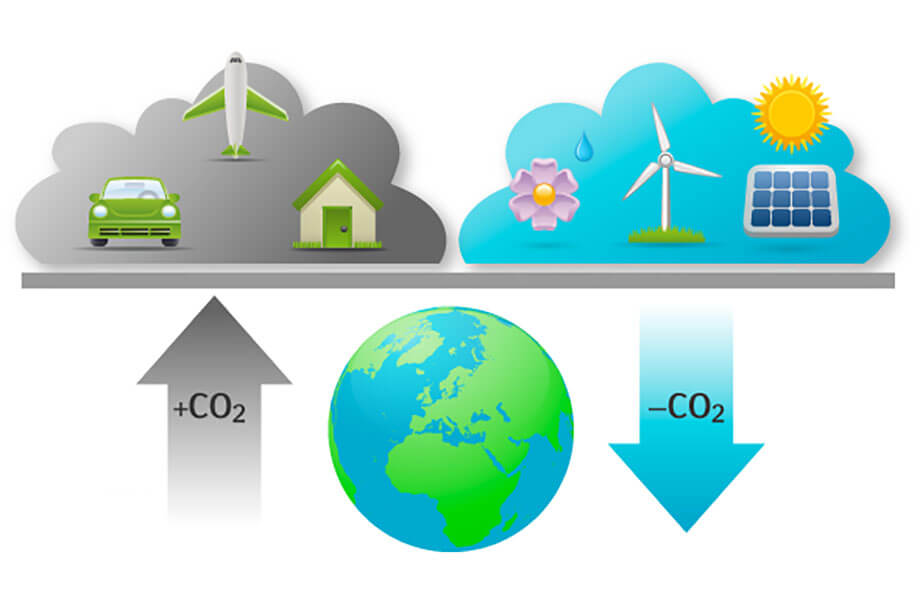
The 7 Steps to Carbon Neutrality

Every organization, company, and individual can follow this proven process to achieve carbon neutrality:

Carbon offset is a process where an individual or organization purchases carbon credits to compensate for their own emissions.

Carbon Offset – Carbon Compensation

The process where organizations or individuals purchase carbon credits to offset their emissions

0

Commitment

Decision and climate protection pledge. Change begins with making it a priority.

1

Carbon Footprint Assessment

Calculate your company, product, or personal emissions. Measure accurately.

2

Emission Reduction

Take concrete steps to reduce greenhouse gas emissions.

3

Carbon Offset

Purchase carbon credits to compensate for your remaining emissions.

4

Internal Communication

Inform your team about progress and goals.

5

Regularization

Review annually, learn from results, and repeat the process.

6

External Communication

Show the world you've taken responsibility. Inspire others too.

The Personal Carbon Footprint

How Do We Generate Carbon Dioxide?

An individual's carbon footprint comes from many everyday activities: our home energy consumption, kilometers traveled by car, travel habits, and perhaps most surprisingly, from the production of purchased food and products.

Hungary's Average: The average Hungarian adult emits 6 tons of CO₂ equivalent annually. This is comparable to a car traveling more than 24,000 km per year. But good news: with attention and simple, everyday changes, we can significantly reduce this.

Reduction Opportunities:

Energy: Renewable energy, energy-efficient appliances, insulation
Transportation: Less flying, public transport, electric vehicles
Food: Less meat consumption, local products
Consumption: More conscious shopping, second-hand items

🧑‍💼 Personal Offset

Assessment methods and first steps to reduce your personal carbon footprint.

Learn More

Website Carbon Dioxide Emissions

Surprising to many, every website emits carbon dioxide. Why? Because websites run on servers powered by electricity. And electricity still comes over 80% from burning fossil fuels (coal, oil, natural gas).

The Fact: Every page load, every image view, every data transfer leaves a digital footprint. Viewing an average website emits about as much as 0.3 grams of CO₂. This sounds small, but multiply it by a month, a year... and it becomes significant.

The Solution:

Websites can be made carbon neutral using green energy, optimization, and offsetting remaining emissions. This is a shared responsibility of both companies and users.

🌐 Website Offset

Learn about website emissions and how to make a website carbon neutral.

Learn More

For Companies

The carbon neutral goal is much more than a marketing strategy – it is responsible thinking on the issue of global warming. Sustainability encompasses a company's long-term success, reputation, and ethical obligation.

Why Is It Important for Companies?

  • Reduced operating costs through energy efficiency
  • Better brand perception and customer loyalty
  • More attractive to investors and partners
  • Reduced regulatory risks
  • Competitiveness in the green economy

You can contact us using the form below:

Carbon Neutrality Is an Essential Element of Sustainability

A livable future is not an optional goal – it is a necessary prerequisite. We stand at one of the most important points in our history. The decision to contribute through action or not must be made today.

Be part of this movement too. Every action counts.